
Why Aqaba is Jordan’s diving capital
Aqaba is Jordan’s only coastal city and the country’s main gateway to the Red Sea. For travelers, this makes Aqaba the natural place to add scuba diving, snorkeling, boat trips, beach time, and water activities to a Jordan itinerary. After Petra, Wadi Rum, Amman, or the Dead Sea, Aqaba gives visitors a completely different side of the country: clear water, coral reefs, wrecks, marine life, and a relaxed Red Sea atmosphere.
Diving in Aqaba is one of the most accessible Red Sea experiences in the region. Many dive sites are close to shore, the sea is often calm, and the underwater environment includes coral gardens, sandy slopes, seagrass areas, wrecks, and artificial reef attractions. This variety makes Aqaba suitable for first-time divers, certified divers, PADI students, families, snorkelers, underwater photographers, and travelers who want a safe and memorable activity in Jordan.
For guests searching for where to dive in Aqaba, the answer depends on the guest’s level, confidence, time, and preferred experience. Beginners usually start with a supervised shore dive or beginner scuba experience. Certified divers may choose reef dives, wreck dives, boat dives, or deeper sites depending on certification level and daily sea conditions. Guests who do not want to scuba dive can still enjoy the Red Sea through snorkeling, especially around suitable shallow reef areas.
Sindbad Dive Club gives guests a practical way to experience Aqaba underwater while staying connected to a wider beach and sea activity setup. Guests can plan scuba diving as a standalone activity, combine it with a day at Berenice Beach Club, or explore Sindbad’s marine transport and sea experiences for a wider Red Sea day.
The real strength of Aqaba is not only that it has diving. It is that different types of guests can enjoy the sea in different ways. One person may take a diving course, another may join a beginner dive, another may snorkel, and the rest of the group may enjoy the beach club, pools, water sports, or boat activities. This makes Aqaba especially suitable for couples, families, mixed groups, school groups, corporate groups, and hotel guests.
Diving with Sindbad Dive Club
Choosing a diving center in Aqaba should not be based only on price. Scuba diving is a trust-based activity. Guests are choosing the people who will guide them underwater, prepare their equipment, check conditions, brief them properly, and help them enjoy the Red Sea safely.
Sindbad Dive Club is part of the wider Sindbad Group experience in Aqaba, connected with beach activities, diving, water sports, yachting, and boat excursions. This matters because guests often want more than one activity. A visitor may want to try diving in the morning, relax at the beach afterward, book a boat excursion the next day, or plan a family-friendly Red Sea activity where not everyone has to dive.
A good diving experience starts before entering the water. Guests should receive clear information about the activity, what is included, what to bring, how long it takes, what level is required, and whether the selected dive is suitable for their comfort and medical condition. The dive team should explain the equipment, hand signals, breathing, equalizing, movement, buoyancy, reef protection, and how the dive will be conducted.
For beginners, this calm preparation is essential. First-time divers are often excited but nervous. The first few minutes with scuba equipment can feel unusual because breathing underwater is not a normal daily experience. Good instruction helps the guest slow down, breathe normally, relax their body, and trust the process.
For certified divers, the needs are different. They may ask about specific Aqaba dive sites, depth profiles, wrecks, visibility, equipment, boat availability, underwater photography, and whether the dive plan matches their certification level. A professional diving center should guide this discussion clearly and avoid pushing a diver into a site or depth that does not match their ability.
Guests who are ready to book or ask questions can contact the team through the Sindbad contact page. Guests comparing activities can also explore the main Sindbad diving page to understand available diving services in Aqaba.
Quick answer: where to dive in Aqaba
The main diving areas in Aqaba are located along the Red Sea coastline and around the South Beach / Aqaba Marine Park area. Aqaba offers reef dives, beginner-friendly shore dives, wreck dives, artificial reef attractions, and boat-access sites.
Recognized Aqaba dive sites and underwater attractions include:
- Power Station
- First Bay North
- First Bay South
- Ras Al Yamanya
- King Abdullah Reef
- Black Rock
- Rainbow Reef
- Cedar Pride Wreck
- Tarmac Five / Barge Wreck
- Japanese Garden
- Tayong Wreck
- Gorgone I
- Gorgone II
- Seven Sisters
- New Canyon / Tank Wreck
- Eel Garden B
- Shorouk Wreck
- Yellowstone Reef
- Blue Coral
- Kiwi Reef
- C-130 Hercules
- Tristar aircraft wreck
- Underwater Military Museum
Not every dive site is suitable for every guest. Some sites are better for beginners. Some are better for certified divers. Some are stronger for snorkeling. Some are known for wrecks or artificial reef attractions. Others are more suitable for photographers, reef lovers, or advanced divers.
For first-time guests, the best choice is usually a calm, shallow, professionally guided experience rather than the most famous or deepest site. For certified divers, the best choice depends on certification level, recent diving experience, comfort, conditions, and whether the guest wants coral reefs, wrecks, marine life, or underwater photography.
Guests can contact Sindbad before arrival to confirm which dive sites are suitable for their level, timing, certification, and sea conditions.
Best diving sites in Aqaba
Aqaba’s dive sites are one of the main reasons the city has become Jordan’s diving capital. The coastline includes coral reefs, sandy slopes, seagrass areas, wrecks, underwater military attractions, and sites suitable for different experience levels.
Some guests come to Aqaba for their first Red Sea dive. Others arrive as certified divers looking for wrecks, reef walls, marine life, or underwater photography. The best site depends on certification level, confidence, sea conditions, visibility, and the type of dive the guest wants to experience.
Power Station
Power Station is one of Aqaba’s well-known dive areas and is often associated with deeper profiles, wall-style underwater topography, and more dramatic reef scenery. It is not usually the first choice for nervous beginners. It is better suited to divers whose certification level, comfort, and conditions match the planned dive.
Guests interested in advanced reef scenery should ask the dive team whether Power Station is suitable for their certification, recent diving experience, and the day’s sea conditions.
First Bay North and First Bay South
First Bay North and First Bay South are part of Aqaba’s important diving coastline. These areas can offer coral, fish life, and practical dive planning depending on daily conditions and entry points. They are useful for divers who want to understand Aqaba beyond only the famous wrecks.
These sites show that diving in Aqaba is not only about one or two headline attractions. The coastline includes multiple reef and training possibilities for different guest levels.
Ras Al Yamanya
Ras Al Yamanya is a useful site for divers interested in marine life, sandy habitats, reef edges, and underwater details. Some divers enjoy large wrecks and dramatic structures, while others prefer slow dives where they can observe fish, eels, coral textures, and smaller reef life.
Ras Al Yamanya can be a good option for divers who enjoy marine life observation and a calmer dive style, depending on daily conditions.
King Abdullah Reef
King Abdullah Reef is one of Aqaba’s important reef sites and a strong name for visitors searching for coral reef diving in Jordan. It can suit guests who want reef scenery, fish life, and a classic Red Sea underwater experience.
Guests who enjoy reef diving may also ask about Japanese Garden, Rainbow Reef, Black Rock, Seven Sisters, and Kiwi Reef.
Black Rock
Black Rock is a recognized Aqaba dive site that can work well for reef-focused diving. It is useful for guests searching for accessible coral scenery, fish life, and a Red Sea diving experience without necessarily focusing on wrecks.
Because Black Rock is connected with the South Beach diving area, it can be relevant for guests staying in Aqaba who want a practical shore-based or beach-connected diving experience.
Rainbow Reef
Rainbow Reef has strong appeal because the name itself suggests color, coral, and underwater photography. It can attract divers who want visual reef scenery and guests who are comparing Aqaba’s most attractive coral sites.
This type of reef site is suitable for guests who want relaxed Red Sea diving, colorful underwater scenery, and a dive plan focused on coral and fish life.
Cedar Pride Wreck
Cedar Pride Wreck is one of the strongest wreck-diving attractions in Aqaba. Guests interested in wreck diving often want to know whether Cedar Pride, aircraft wrecks, military museum attractions, or other artificial reef sites are suitable for their level.
Cedar Pride is especially important because wrecks give Aqaba a clear diving identity. Many destinations have reefs, but not every destination combines accessible wreck diving with beach club facilities, PADI training, shore diving, and boat diving options.
Tarmac Five / Barge Wreck
Tarmac Five, also known as the Barge Wreck, adds another wreck and artificial reef option to Aqaba’s underwater portfolio. It can be attractive for divers who enjoy exploring structures and marine life around wreck environments.
Wrecks should always be approached with proper briefing, correct buoyancy, respect for depth limits, and no unsafe penetration unless the diver has the right training and the conditions allow it.
Japanese Garden
Japanese Garden is one of Aqaba’s most memorable reef names. It can appeal to both divers and snorkelers because of its coral scenery, fish life, and accessible Red Sea character.
Japanese Garden is a strong option for guests who want colorful reef scenery, relaxed underwater movement, and a site that can appeal to both divers and snorkelers depending on conditions.
Tayong Wreck
Tayong Wreck is another important wreck reference in Aqaba. Certified divers interested in wrecks can ask Sindbad about suitable wreck options based on certification level, recent experience, and daily conditions.
The best wreck dive is not always the deepest or most dramatic one. It is the wreck that matches the diver’s training, comfort, air consumption, buoyancy, and the sea conditions on the day.
Gorgone I and Gorgone II
Gorgone I and Gorgone II help show the reef-diving side of Aqaba’s site map. These sites can suit guests who want coral scenery, relaxed reef exploration, and a wider understanding of Aqaba’s underwater environment.
They are useful for divers who prefer reef formations and marine life instead of focusing only on wrecks.
Seven Sisters
Seven Sisters is one of Aqaba’s best-known reef areas and is often associated with coral pinnacles and nearby underwater attractions. It is useful for divers who want a visually interesting reef dive and for guests who want to understand the relationship between natural coral scenery and artificial reef attractions.
New divers interested in this area should first ask the dive team whether the site is suitable for their level and comfort in the water.
New Canyon / Tank Wreck
The Tank is one of Aqaba’s most photogenic underwater attractions. Many guests are attracted by the idea of seeing a tank underwater, but the dive should still be treated as a guided diving activity, not only a photo stop.
Divers should follow the guide, control buoyancy, and avoid touching structures or marine life.
Eel Garden B
Eel Garden B is valuable for marine-life-focused diving. It helps show that Aqaba is not only about wrecks and large underwater structures. Sandy habitats, reef edges, and smaller marine life are also part of the Red Sea experience.
Guests who enjoy slow observation, small marine details, and underwater photography may find this type of site especially interesting.
Shorouk Wreck
Shorouk Wreck adds another option to Aqaba’s wreck-diving scene. Certified divers interested in wrecks can ask Sindbad about depth, suitability, visibility, and whether the site matches their experience level.
Any wreck dive should be selected according to certification, conditions, and guide assessment.
Yellowstone Reef
Yellowstone Reef is another named reef site in Aqaba. It can suit guests who want to experience coral formations and reef scenery beyond the most famous sites.
For divers who prefer natural reef environments, Yellowstone Reef can be part of a wider reef-diving plan depending on conditions and availability.
Blue Coral
Blue Coral is a useful reef site for guests interested in coral formations, underwater photography, and relaxed reef diving.
Like all reef dives, the experience depends on buoyancy control, visibility, sea conditions, and careful movement around coral.
Kiwi Reef
Kiwi Reef can be suitable for guests interested in relaxed reef diving, coral formations, and marine life. It gives divers another option beyond the major wrecks and helps show the variety of Aqaba’s underwater sites.
Guests who want a softer reef-focused dive can ask whether Kiwi Reef is suitable for their level and the day’s conditions.
C-130 Hercules
The C-130 Hercules aircraft wreck is one of Aqaba’s most distinctive underwater attractions. Aircraft wrecks create strong interest because they are visual, unusual, and memorable.
Certified divers interested in aircraft wrecks should ask Sindbad about suitability, depth, visibility, and current conditions before booking.
Tristar aircraft wreck
The Tristar aircraft wreck is another major underwater attraction in Aqaba. It is especially relevant for certified divers, underwater photographers, and visitors looking for unique dive experiences in Jordan.
Like all large wrecks, it should be approached with professional planning, respect for diver limits, and careful attention to briefing and conditions.
Underwater Military Museum
The Underwater Military Museum is one of Aqaba’s most unique diving attractions. It combines artificial reef development, military vehicles, underwater photography, and Jordan-specific character.
It is especially interesting for certified divers who want something different from a traditional coral reef dive.
Shore diving in Aqaba
Shore diving is one of the main advantages of diving in Aqaba. It allows guests to enter the water from the beach or shoreline instead of using a boat for every dive. This makes Aqaba practical for beginners, beginner scuba experiences, PADI training dives, relaxed reef dives, and guests who want a simple Red Sea experience without a full boat schedule.
For first-time divers, shore diving can feel less intimidating than boat diving. The briefing happens on land, the equipment can be fitted carefully, and the instructor can help the guest enter the water gradually. This gives beginners more time to adjust to breathing, movement, and underwater communication.
Shore diving is also useful for families and mixed groups. One person may dive while others enjoy Berenice Beach Club, relax on the beach, join snorkeling, or book another water activity. This makes the experience easier for hotel guests and groups because not everyone has to commit to the same activity.
For PADI students, shore diving can be very practical. Skills can be introduced step by step, and students can build comfort before progressing to more complex dives. For certified divers, shore diving can still offer real value when the selected site includes coral, fish life, wreck attractions, or good visibility.
Guests looking for a simple first dive can contact Sindbad through the Contact Us page and ask which beginner diving option is suitable for their comfort level and schedule.
Boat diving in Aqaba
Boat diving gives guests a different Red Sea experience. Instead of entering from shore, the dive is planned from a boat, often as part of a wider sea activity day. Boat diving can be attractive for certified divers, groups, underwater photographers, and guests who want a more complete Red Sea atmosphere.
The main benefit of boat diving is the journey itself. Guests enjoy time at sea, coastal views, equipment preparation on board, and access to selected dive sites depending on the plan and conditions. Boat diving can also combine well with snorkeling, relaxation, and group activities.
Boat diving requires more coordination than shore diving. The schedule, boarding time, equipment loading, sea conditions, selected sites, diver level, and safety procedures all need to be clear. This is why guests should confirm details in advance and arrive on time.
For beginners who are nervous, shore diving may be the better starting point. For certified divers who want a fuller Red Sea experience or selected sites that are better reached by boat, boat diving can be the stronger choice.
Guests interested in sea-based activities can explore Sindbad’s marine transport and sea experiences and then contact Sindbad to confirm whether a dive-focused or mixed activity plan is suitable.
Snorkeling in Aqaba
Snorkeling is one of the easiest ways to enjoy the Red Sea in Aqaba. It does not require full scuba equipment or a diving certification. Guests use a mask, snorkel, and fins to stay at or near the surface while looking down at the reef, fish, and underwater scenery.
This makes snorkeling suitable for families, couples, younger guests, nervous swimmers, mixed groups, and visitors who want a lighter activity than scuba diving. It is also a good first step for people who are thinking about scuba but are not ready to breathe underwater with a tank.
Aqaba’s snorkeling value comes from shallow reef areas, clear water, and visible marine life near suitable sites. Guests should still follow safety and environmental rules. Snorkelers must avoid standing on coral, touching marine life, chasing fish, or damaging reef structures with fins.
Snorkeling can also support the diving journey. Many guests start with snorkeling, become comfortable in the water, and then book a beginner scuba dive. Others dive one day and snorkel the next as a lighter activity.
For mixed groups, snorkeling is important because it allows non-divers to participate in the Red Sea experience. A family can include divers, snorkelers, and beach guests in the same day plan. This makes Aqaba more flexible than destinations where the activity options are separated.
Snorkeling vs scuba diving
Snorkeling and scuba diving both allow guests to enjoy the Red Sea, but they are different experiences.
Snorkeling is simpler. The guest stays at or near the surface, breathes through a snorkel, and looks down into the water. It is lighter, easier, and usually requires less preparation. It is a good option for guests who want a relaxed activity, families with mixed comfort levels, or visitors who are not ready for scuba.
Scuba diving is more immersive. The guest uses a cylinder, regulator, buoyancy control device, weights, fins, and other equipment to breathe underwater and explore below the surface. Scuba gives closer access to reefs, wrecks, sandy slopes, underwater attractions, and marine life. It also requires more briefing, supervision, and safety discipline.
Choose snorkeling if you want an easy surface activity. Choose beginner scuba diving if you want to try breathing underwater for the first time. Choose a PADI course if you want to become a certified diver. Choose guided dives if you are already certified and want to explore Aqaba’s reefs and wrecks.
Aqaba is strong because guests do not have to choose only one. They can snorkel, dive, relax at the beach club, and join boat activities during the same trip.
Beginner scuba diving in Aqaba
Aqaba is a good place to try scuba diving for the first time because many diving experiences can be planned from shore, the Red Sea environment is attractive, and professional supervision is available for beginners.
Beginner scuba diving should be calm, clear, and properly supervised. The guest should not be pushed quickly into the water without understanding the basics. A proper first diving experience includes briefing, equipment introduction, breathing practice, hand signals, equalization, underwater behavior, and environmental rules.
The most important skill for beginners is relaxed breathing. Slow, steady breathing helps conserve air, supports buoyancy, and reduces anxiety. Beginners should also move less, avoid using their hands too much, and follow the instructor closely. Safety comes first, and no guest should dive alone.
Guests who are not certified can start with a beginner scuba experience through Sindbad Dive Club. This is suitable for visitors who want to try scuba without committing immediately to a full certification course.
Guests who want more detail before booking can contact the dive team and ask what to expect, who can dive, what to bring, and how to prepare mentally and physically.
PADI diving courses in Aqaba
PADI is one of the most recognized scuba diving training systems in the world. For guests searching for PADI Aqaba, PADI course Jordan, or PADI Open Water Course Aqaba, the main concern is trust. They want to know that the training is structured, the instructor is qualified, the equipment is suitable, and the open-water environment is appropriate for learning.
Aqaba is a strong location for PADI training because students can learn in real Red Sea conditions. The city offers accessible dive sites, coral reef environments, shore diving possibilities, and a tourism setup that supports visitors who want to combine learning with a wider Jordan trip.
The most important entry-level certification is the PADI Open Water Diver course. This course is designed to give new divers the knowledge, skills, and confidence to dive within certification limits after successful completion. It normally includes theory, skill practice, open-water dives, equipment use, safety procedures, and instructor evaluation.
First-time guests who are not ready for a full course can begin with a supervised beginner scuba experience. Guests who want to become certified can ask Sindbad about PADI course availability, duration, requirements, and suitable start dates.
Course selection should depend on the guest’s confidence, swimming comfort, available time, medical fitness, and previous diving experience. Guests can contact Sindbad before arrival to choose the most suitable diving option.
PADI 5 Star Dive Resort experience
A PADI 5 Star Dive Resort status is important because it gives guests a trust signal before they book. It shows that the diving operation is connected with PADI standards, training, continuing education, and professional dive services.
For guests, this matters because diving is not only an activity. It is an experience that depends on safety, instruction, equipment, planning, and trust. A guest may be relaxed on land but nervous underwater. A professional dive team must know how to guide different comfort levels, answer questions clearly, and put safety before pressure to sell.
A strong diving center experience includes clear booking information, professional guest communication, equipment fitting and checks, safety briefing before the dive, site selection based on level and conditions, respect for certification limits, marine life and reef protection guidance, support for beginners and certified divers, and clear next steps for guests who want more training.
Guests looking for a professional diving center in Aqaba can use this page as the main guide, then contact Sindbad to choose the right diving experience according to their level, schedule, and comfort in the water.
Diving equipment and preparation
Diving equipment is one of the clearest trust signals on a diving website. Guests want to know that the equipment is suitable, prepared, checked, and matched to them correctly. They also want to know what is provided and what they should bring.
Typical scuba diving equipment includes a mask, fins, wetsuit or exposure suit depending on season and comfort, buoyancy control device, regulator, cylinder, weights, pressure gauge, depth and timing device or dive computer where applicable, and safety accessories according to the dive plan.
For beginners, the equipment should be introduced slowly. The guest needs to understand how to breathe from the regulator, how to clear the mask if needed, how to equalize, how to communicate underwater, and how to stay close to the instructor.
For certified divers, equipment questions may be more specific. They may ask about wetsuit thickness, tanks, weights, dive computers, camera use, personal gear, and whether rental equipment is available. Guests who have their own gear should mention this before arrival so the team can plan correctly.
The phrase latest diving equipment should always be backed by clear practice. What matters to guests is not only whether the equipment looks new, but whether it is maintained, checked, fitted, and used properly. A professional diving center should make the guest feel comfortable before entering the water.
Guests who need equipment information before booking can ask Sindbad through the Contact Us page.
Marine life in Aqaba
Aqaba’s underwater environment is one of the main reasons visitors choose to dive or snorkel in Jordan. The Red Sea here includes coral reef habitats, fish life, seagrass areas, and marine species that make the dive experience more than just an activity.
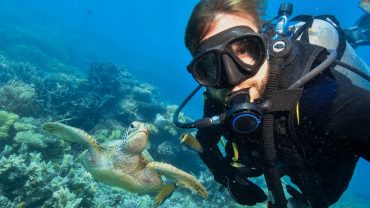
Divers and snorkelers may see colorful reef fish, coral formations, sandy habitats, seagrass, invertebrates, and occasionally turtles depending on the site, season, luck, and conditions. The experience changes from site to site. Some areas are better for coral scenery. Some are better for wreck structures. Some are better for small marine life and underwater photography.
Aqaba’s marine environment should be treated with respect. The reef is not a decoration. It is a living ecosystem. Even a small touch, careless fin kick, or attempt to stand on coral can cause damage. This is why reef etiquette is part of the diving experience, not an optional environmental message.
Diving safety and reef etiquette
Safety is the foundation of every good dive. A beautiful site does not matter if the dive is not planned correctly. Guests should always follow the dive guide or instructor, stay within certification limits, listen to the briefing, and communicate any concern before entering the water.
Important safety points include never diving alone, staying close to your buddy or instructor, equalizing early and often, breathing slowly and continuously, never holding your breath, staying within your certification and comfort level, watching your air supply, following the planned route, ascending slowly, respecting no-fly time after diving, and telling the team about any medical condition before the dive.
Reef etiquette is equally important. Divers and snorkelers should not touch coral, stand on the reef, chase fish, feed marine life, collect shells, leave plastic, kick coral with fins, or ignore local rules and guide instructions.
These rules apply to divers and snorkelers. In shallow water, snorkelers can damage coral by standing, kicking, or holding reef structures. A professional Red Sea experience should protect both the guest and the marine environment.
Best time to dive in Aqaba
Aqaba can be visited for diving across much of the year, but the best experience depends on the guest’s comfort, water temperature, weather, visibility, wind, and sea conditions.
Spring and autumn are often attractive because the weather is comfortable and the sea experience is enjoyable without the strongest summer heat. Summer is popular for beach activity, family travel, and Red Sea holidays, but guests should plan hydration, sun protection, and suitable timing. Winter can still be suitable for diving with proper exposure protection and daily condition checks.
No professional operator should promise perfect conditions every day. Final dive planning depends on the weather, sea state, visibility, guest level, certification, comfort, and operational schedule.
Guests visiting Aqaba for a short trip should contact Sindbad before arrival to confirm available diving options, timing, and the most suitable activity for their group.
How to plan your diving day
A good diving day in Aqaba starts with choosing the right activity. Guests should first decide whether they want snorkeling, a beginner scuba experience, a certified guided dive, a PADI course, a shore dive, a boat dive, or a wreck-focused dive.
Beginners should start with a simple supervised experience. Guests who want certification should ask about PADI course availability. Certified divers can ask about reef dives, wreck dives, shore dives, or boat diving. Non-divers can choose snorkeling or enjoy a wider sea day through Sindbad’s beach and marine activities.
Before booking, guests should share their experience level, certification status, last dive date, medical concerns, swimming comfort, and group details. This helps Sindbad recommend the right option.
Guests should bring swimwear, sun protection, dry clothes, water, any personal diving gear if preferred, and certification details if already certified. They should avoid heavy alcohol before diving, avoid diving while sick or congested, and ask about no-fly time after diving if they are traveling soon.
Diving in Aqaba is one of the best ways to experience the Red Sea in Jordan. With reefs, wrecks, snorkeling, shore dives, boat dives, PADI courses, and beach-based activities, Sindbad Dive Club gives guests a practical gateway to the underwater side of Aqaba.
For booking questions, course availability, beginner diving options, or certified diver programs, guests can contact Sindbad directly through the Contact Us page.
 Deutsch
  English
  Русский
  Română
  Français
  Español
  Italiano
Kommentar (0)