
Scuba Diving for Beginners in Jordan: Start in Aqaba with Sindbad Dive Club
The best place to try scuba diving in Jordan
Scuba diving for beginners in Jordan starts in Aqaba. Aqaba is the country’s only coastal city and the main gateway to the Red Sea, making it the natural place for first-time divers to experience coral reefs, clear water, marine life, and professional diving services.
For many visitors, Jordan is known for Petra, Wadi Rum, the Dead Sea, Amman, and desert landscapes. Aqaba adds a completely different experience to the trip. It gives travelers the chance to go underwater, breathe below the surface, see reef life, and try one of the most memorable Red Sea activities in the country.
Beginner scuba diving in Aqaba is suitable for guests who have never dived before, travelers who want to try something new, couples looking for a shared activity, families with suitable participants, and visitors who want a safe introduction to the underwater world.
With Sindbad Dive Club, guests can begin their scuba experience in Aqaba and combine it with the wider Sindbad Group setup, including Пляжный клуб Беренис, the main Sindbad diving page, and Sindbad’s marine transport and sea experiences.
Guests who want to understand the wider diving destination can also read the full diving in Aqaba guide.
Can beginners really scuba dive?
Yes, beginners can try scuba diving when the activity is properly supervised, the conditions are suitable, and the guest follows the instructions carefully. A first scuba experience is not the same as independent diving. Beginners do not go underwater alone. They are introduced to the equipment, safety rules, breathing, hand signals, and basic underwater behavior before entering the water.
The main challenge for most beginners is not physical strength. It is comfort and confidence. Breathing underwater feels unusual at first. The mask, regulator, fins, and buoyancy equipment are new. The first few minutes are about relaxing, breathing slowly, and trusting the equipment and instructor.
A good beginner scuba experience should never feel rushed. The dive team should explain what will happen, fit the equipment correctly, answer questions, and move at a pace that matches the guest’s comfort.
For guests who are nervous, the best approach is honesty. Tell the instructor before the activity starts. A professional dive team can slow down, explain more, and help the guest feel comfortable before entering the water.
Why Aqaba is suitable for first-time divers
Aqaba is suitable for first-time divers because the Red Sea is accessible, many diving areas are close to shore, and the city has a strong diving infrastructure compared with other places in Jordan.
Shore diving is one of Aqaba’s practical advantages. Instead of starting directly from a boat, many beginner experiences can begin from the beach or shoreline, depending on the selected site and daily conditions. This makes the first experience easier for many guests because they can prepare on land and enter gradually.
Aqaba also works well for mixed groups. Not everyone in a family or group may want to dive. One guest can try scuba, another can snorkel, and others can enjoy beach time at Пляжный клуб Беренис or ask about other sea activities. This makes Aqaba a flexible destination for families, couples, friends, and hotel guests.
The underwater environment also helps. Beginners do not need extreme depth to enjoy the Red Sea. Even a simple, controlled introductory dive can show fish life, coral scenery, sunlight underwater, and the feeling of moving below the surface.
What beginner scuba diving includes
A beginner scuba diving experience usually includes a briefing, equipment introduction, basic safety explanation, breathing practice, hand signals, and a guided underwater experience. The exact structure depends on the operator, conditions, guest level, and chosen activity.
The briefing is important. It should explain how to breathe through the regulator, how to equalize ear pressure, how to communicate underwater, how to stay close to the instructor, and what to do if the guest feels uncomfortable.
Equipment introduction helps the guest understand what they are wearing. Beginners should know the purpose of the mask, fins, regulator, cylinder, buoyancy control device, weights, and pressure gauge. They do not need to become equipment experts before the first dive, but they should understand the basics.
The underwater part should be calm and supervised. The goal is not to go deep or fast. The goal is to experience breathing underwater safely, observe the reef, and build confidence.
Is beginner scuba diving safe?
Beginner scuba diving is designed to be safe when handled professionally, but it still requires discipline. Guests must listen carefully, follow instructions, and disclose relevant medical information.
The most important beginner safety rules are simple:
Never hold your breath underwater.
Stay close to the instructor.
Equalize your ears early and often.
Move slowly.
Do not touch coral or marine life.
Signal immediately if you feel uncomfortable.
Do not dive if you are sick, congested, or medically unsure.
Do not hide health conditions.
Safety also depends on matching the activity to the guest. A nervous beginner should not be pushed into a difficult dive. A guest with medical concerns may need clearance. A person who is very uncomfortable in water may need a different activity or extra preparation before trying scuba.
A professional diving center should always choose safety over pressure to sell the activity.
Do you need to know how to swim?
You do not need to be an advanced swimmer to try beginner scuba diving, but you should be comfortable in the water and able to follow instructions calmly.
If you panic in water, cannot float, or are afraid to put your face underwater, tell the dive team before booking. They can advise whether scuba is suitable or whether snorkeling, shallow-water practice, or another beach activity is better.
Swimming comfort matters because scuba diving is not only about wearing equipment. It is about staying calm in a water environment, breathing steadily, and following the instructor. Guests who are honest about their comfort level usually have a better and safer experience.
For children or younger guests, parents should not push them into diving if they are not ready. The first underwater experience should be voluntary, calm, and positive.
Medical conditions beginners should mention
Guests should tell the dive team about any medical condition that may affect scuba diving. This includes asthma, breathing problems, heart conditions, ear problems, sinus issues, recent surgery, pregnancy, serious medical history, or medications that may affect safety underwater.
Some guests may need medical approval before diving. This is not a problem or embarrassment. It is part of responsible diving.
Ear and sinus issues are especially important because divers need to equalize pressure while descending. If a guest is congested, sick, or has ear pain, diving may not be suitable that day.
Guests should also avoid heavy alcohol before diving and should ask about flying after diving if they have flights planned soon. No-fly time after diving is an important safety topic and should be confirmed with the dive team.
What to expect before your first dive
Before the dive, the team should help with equipment fitting. The mask should fit properly, fins should be suitable, and the scuba equipment should feel secure. If anything feels uncomfortable, the guest should speak up before entering the water.
The instructor will explain hand signals. Since guests cannot speak underwater, signals are used for “OK,” “up,” “down,” “problem,” “stop,” and other basic communication. Beginners should pay attention to these signals because they make the dive safer and calmer.
Breathing practice is also important. Beginners should breathe slowly and continuously through the regulator. Holding breath underwater is not allowed. Slow breathing helps reduce anxiety, conserve air, and improve comfort.
The instructor may also explain how to clear water from the mask, how to recover the regulator, and how to manage simple situations. The exact skills depend on the type of beginner program and conditions.
What happens underwater
The first underwater moments are usually the most memorable. Many beginners feel strange at first because the body is not used to breathing underwater. After a few minutes, most guests become calmer and start enjoying the experience.
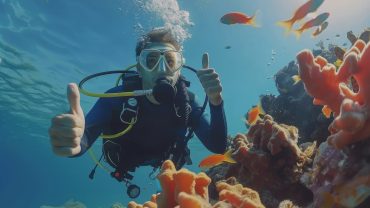
The instructor controls the pace. The guest follows closely, uses slow movements, and communicates with hand signals. The dive may include reef scenery, fish life, sandy areas, and the feeling of floating underwater.
Beginners should not focus on going deep. A shallow, calm, well-guided dive can be more valuable than a deeper dive that feels stressful. The first dive should build confidence, not fear.
Guests should also avoid touching anything. Coral is living and can be damaged easily. Fish and marine life should be observed, not chased or fed. Good habits should start from the first dive.
Shore diving for beginners in Aqaba
Shore diving is one of the reasons Aqaba is practical for beginners. It allows guests to prepare on land and enter the water gradually. For nervous first-time divers, this can be easier than starting from a boat.
Shore diving can also be efficient. Guests can complete the briefing, equipment fitting, and water entry without a long boat transfer. This makes the activity easier to combine with beach time, snorkeling, or other Red Sea activities.
For mixed groups, shore diving is useful because non-divers can stay nearby. A family member can dive while others relax, swim, or enjoy the beach club. This flexibility is important for families and hotel guests.
The final site should still be chosen by the dive team based on conditions, guest comfort, and suitability.
Beginner scuba diving vs snorkeling
Snorkeling and beginner scuba diving are different experiences.
Snorkeling is a surface activity. The guest uses a mask, snorkel, and fins while staying at or near the surface. It is easier, lighter, and usually requires less preparation. It is a good option for guests who want to see the reef without breathing underwater from a tank.
Beginner scuba diving is more immersive. The guest wears scuba equipment, breathes underwater, and follows an instructor below the surface. It gives a stronger feeling of entering the underwater world, but it requires more briefing, supervision, and safety discipline.
Choose snorkeling if you want a light Red Sea activity. Choose beginner scuba diving if you want to experience breathing underwater. Choose a PADI course if you want to become certified and continue diving after the first experience.
Aqaba is suitable for all three, which makes it easier for different guests to enjoy the sea in their own way.
Beginner scuba diving vs PADI course
A beginner scuba experience is not a full certification. It is designed to let guests try scuba diving safely under supervision.
A PADI Open Water course is different. It is structured training that teaches knowledge, skills, equipment use, safety procedures, open-water diving, buoyancy, and buddy awareness. After successful completion, students can continue diving within certification limits.
Guests who only want to try scuba during their holiday should start with a beginner experience. Guests who want a long-term diving skill should ask about a PADI course.
Many divers start with one beginner dive, enjoy it, and then decide to continue into certification. This is a normal path and a good way to test comfort before committing to the full course.
What beginners may see in Aqaba
Beginner divers in Aqaba may see coral formations, reef fish, sandy seabed areas, and other Red Sea marine life depending on the selected site and conditions.
The first dive is not only about what species you see. It is about the experience of entering another environment. Many beginners remember the feeling of breathing underwater, hearing their bubbles, seeing sunlight through the sea, and watching fish move around the reef.
The exact marine life changes from day to day. Visibility, season, site, and guest movement all affect the experience. Calm divers usually see more because they move slowly and avoid disturbing the environment.
Underwater photography may be available depending on the package, conditions, and operator arrangements. Guests should confirm this before booking.
What to bring for beginner scuba diving
Guests should bring swimwear, dry clothes, sun protection, water, and anything needed for beach time after the activity. If the activity is connected with beach club access, towels, transportation, photos, or videos, guests should confirm what is included before arrival.
Guests who wear contact lenses should ask the dive team for advice. Guests who wear glasses may need to discuss mask options or decide whether they can dive comfortably without glasses.
Do not bring heavy valuables into the water area unless there is a safe place to store them. Guests should also avoid heavy meals and alcohol before diving.
The most important preparation is mental: arrive ready to listen, ask questions, and move slowly.
Common beginner mistakes
The most common beginner mistake is moving too much. Many new divers use their hands, kick too hard, or rush. This increases air use and makes the dive less comfortable.
Another common mistake is holding breath. Divers should breathe slowly and continuously. Holding breath underwater is unsafe and should be avoided.
Some beginners forget to equalize their ears early. Equalizing should be done gently and often during descent. If ear discomfort continues, the guest should signal the instructor.
Touching coral is another serious mistake. Beginners sometimes reach for the reef because they want balance, but coral can be damaged easily. Good buoyancy and calm movement help protect the reef.
Finally, some guests do not speak honestly before the dive. If you are nervous, sick, uncomfortable, or medically unsure, tell the instructor.
How to choose a beginner diving center in Aqaba
Choosing the right diving center in Aqaba matters. Look for clear communication, professional briefing, suitable equipment, honest safety guidance, and a team that does not rush beginners.
A good diving center should ask about your experience level, medical conditions, swimming comfort, and expectations. It should explain what is included, what to bring, how the dive works, and what happens if you feel uncomfortable.
The lowest price is not always the best choice. Beginner diving is about trust, safety, and guidance. A cheap but rushed dive can create a bad first experience. A properly guided beginner dive can create confidence and turn a nervous guest into a future certified diver.
Guests can start by reviewing the main Sindbad diving page and then contacting the team through the Sindbad contact page.
Booking beginner scuba diving in Jordan
Before booking, guests should share the date they want to dive, number of people, swimming comfort, age of participants, medical concerns, and whether the group includes non-divers.
This helps the team recommend the most suitable activity, timing, and setup. It also helps avoid mistakes such as booking a beginner into an unsuitable dive or failing to plan for family members who do not want to dive.
Guests can also ask whether the dive can be combined with beach time at Пляжный клуб Беренис or other Sindbad sea activities.
Scuba diving for beginners in Jordan is not complicated when it is planned properly. Aqaba gives guests the Red Sea, professional diving support, accessible dive areas, and the chance to try one of Jordan’s most memorable activities safely.
For booking questions, guests can contact Sindbad through the Contact Us page.
FAQs
Can beginners scuba dive in Jordan?
Yes. Beginners can try scuba diving in Jordan through supervised experiences in Aqaba. Aqaba is the main Red Sea diving destination in Jordan and is suitable for first-time divers when conditions and supervision are appropriate.
Where is the best place for beginner scuba diving in Jordan?
Aqaba is the best place for beginner scuba diving in Jordan because it is the country’s only coastal city and offers Red Sea access, dive centers, shore diving options, and marine life.
Do I need a scuba license for beginner diving?
No. A supervised beginner scuba experience does not require a diving license. However, it is not a certification and does not allow you to dive independently afterward.
Is beginner scuba diving safe?
It is designed to be safe when handled by professionals, but guests must follow instructions, disclose medical conditions, breathe continuously, stay close to the instructor, and avoid diving when sick or medically unsure.
Do I need to know how to swim?
You should be comfortable in the water and able to follow instructions calmly. If you cannot swim or are afraid of water, tell the dive team before booking so they can advise whether scuba is suitable.
What is the minimum experience needed?
No previous scuba experience is needed for a beginner scuba activity. The dive team will explain the equipment, safety rules, breathing, hand signals, and what to expect.
What will I see during beginner diving in Aqaba?
Depending on the site and conditions, beginners may see coral formations, reef fish, sandy seabed areas, and Red Sea marine life.
Is snorkeling better for nervous guests?
Snorkeling may be better for guests who are not ready to breathe underwater with scuba equipment. It allows guests to enjoy the Red Sea from the surface with lighter preparation.
Can I continue to a PADI course after a beginner dive?
Yes. Many guests try beginner scuba diving first and then continue to a PADI course if they enjoy the experience and want to become certified.
What should I bring for my first scuba dive?
Bring swimwear, dry clothes, sun protection, water, and anything needed for beach time. Ask Sindbad what equipment and extras are included before arrival.
Can families book beginner scuba diving?
Yes. Families can book beginner scuba experiences if the participants meet the requirements. Non-divers can usually enjoy beach time, snorkeling, or other activities depending on the plan.
What if I feel nervous underwater?
Signal your instructor immediately. The dive can slow down, pause, or stop depending on your comfort. A good beginner experience should be calm and controlled.
Can I fly after beginner scuba diving?
Flying after diving requires waiting time. Guests with flights planned soon should ask the dive team about no-fly guidance before booking.
How do I book beginner scuba diving in Aqaba?
Contact Sindbad through the website contact page or main diving page. Share your preferred date, number of people, swimming comfort, age, and any medical concerns.

 Русский
  English
  Deutsch
  Română
  Français
  Español
  Italiano
Комментарий (0)