
PADI Open Water Course Aqaba with Sindbad Dive Club
Become a certified diver in the Red Sea
The PADI Open Water Course in Aqaba is the starting point for guests who want to become certified scuba divers. It is designed for beginners who want more than a one-time diving experience and are ready to learn the skills, safety rules, and confidence needed to dive within certification limits after completing the course.
Aqaba is one of the best places in Jordan to start scuba diving because it combines accessible Red Sea dive sites, shore diving opportunities, coral reefs, marine life, and a professional diving environment. Students can learn in real open-water conditions while also enjoying the wider Aqaba beach and sea experience.
With Sindbad Dive Club, guests can start their diving journey in a setting connected to Berenice Beach Club, the main Sindbad diving page, and Sindbad’s marine transport and sea experiences. This makes the course practical for travelers, hotel guests, couples, families, and visitors who want to include diving in their Jordan itinerary.
PADI lists Sindbad Dive Club as a PADI 5 Star IDC Dive Resort located on the shores of Aqaba’s Marine Park, with shore diving, dive boats, training facilities, equipment rental, and PADI scuba diving activities.
What is the PADI Open Water Course?
The PADI Open Water Diver course is the first full scuba diving certification for new divers. It teaches the knowledge, equipment use, water skills, safety procedures, and open-water experience needed to become a certified recreational diver.
This course is different from a beginner trial dive. A trial dive introduces guests to scuba under direct supervision, but it does not make them certified divers. The PADI Open Water course is structured training. It gives students the foundation to continue diving after successful completion.
The course usually includes three main parts: knowledge development, confined or controlled-water skills, and open-water training dives. Students learn how scuba equipment works, how to plan basic dives, how to communicate underwater, how to manage buoyancy, how to handle common problems, and how to protect the marine environment.
For many guests, the first certification is a turning point. After completing the course, diving becomes more than an activity booked during a holiday. It becomes a skill that can be used in different destinations around the world.
Why take your PADI course in Aqaba?
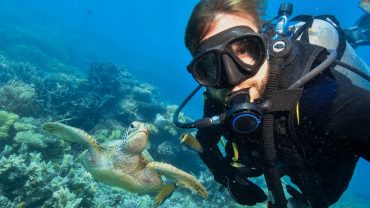
Aqaba gives new divers a practical and memorable learning environment. Unlike inland training locations, students can learn directly beside the Red Sea and experience real marine life during the course. This helps connect the training with the reason many people want to dive in the first place: to explore the underwater world.
The Red Sea environment in Aqaba can be suitable for beginners because many dive areas are accessible, the coastline offers shore-based training options, and the underwater scenery includes coral, fish life, sandy areas, and selected wreck or artificial reef features depending on level and conditions.
Aqaba is also easy to combine with the rest of Jordan. Many visitors travel from Amman, Petra, Wadi Rum, or the Dead Sea and finish their trip by the Red Sea. Completing a diving course in Aqaba can turn the end of the trip into a practical achievement, not only a beach stay.
For guests staying in Aqaba hotels, the course can be arranged around the diving schedule, training sessions, rest time, and other activities. Guests who are traveling with non-divers can still plan a shared day because others can relax at Berenice Beach Club while the student completes training.
Who this course is for
The PADI Open Water Course in Aqaba is for guests who want to become certified divers and are ready to commit time, attention, and energy to proper training.
It is suitable for beginners who want to learn scuba diving from the start, travelers who want to add a real skill to their holiday, guests who tried a beginner dive and now want certification, students who want a recognized diving qualification, and families or couples who want to learn together.
It is also suitable for people who want to continue diving in other countries after Jordan. A scuba certification gives future travel more value because the guest can book certified dives instead of only introductory experiences.
This course is not for guests who only want a quick underwater photo, do not want to study, or are not comfortable following safety instructions. For those guests, a supervised beginner scuba experience may be a better first step.
Anyone with medical concerns, breathing issues, ear problems, recent surgery, pregnancy, heart conditions, or medication that may affect diving should tell the dive team before booking. Some guests may need medical clearance before joining.
What students learn
The PADI Open Water Course teaches the foundation of safe recreational scuba diving. The goal is not only to complete a few dives. The goal is to understand how to dive responsibly.
Students learn how scuba equipment works, how to assemble and check equipment, how to breathe underwater, how to equalize pressure, how to use hand signals, how to maintain buoyancy, and how to move efficiently underwater.
They also learn how to respond to common situations. This can include clearing a mask, recovering a regulator, checking air supply, sharing air, controlling ascents, staying with a buddy, and managing basic dive planning.
Buoyancy control is one of the most important skills. Good buoyancy helps divers stay comfortable, reduce effort, protect coral, avoid stirring sand, and enjoy the dive more. It also reduces the risk of accidental contact with the reef.
Environmental awareness is also part of good diving training. New divers should learn from the beginning that coral is living, marine life should not be touched or chased, and plastic or waste does not belong in the sea.
Course structure
The exact schedule should be confirmed with Sindbad before booking, but the PADI Open Water Course normally includes theory, skills practice, and open-water dives.
Knowledge development gives students the basic understanding needed for diving. This may include diving principles, equipment, pressure, safety rules, dive planning, buddy procedures, and environmental responsibility.
Confined or controlled-water training introduces skills in a safer learning environment before students apply them in open water. This stage is important because it gives students time to become comfortable with the equipment and underwater breathing.
Open-water dives allow students to apply what they learned in real diving conditions. In Aqaba, this means learning in the Red Sea environment, where students can experience coral, fish life, and the practical realities of open-water diving.
The course should not be rushed. Some students learn quickly, while others need more time to build comfort. A good course respects the student’s pace while maintaining the required standards.
Shore training and Red Sea open-water dives
Aqaba’s shore-diving environment is one of its advantages for training. Shore access can make the learning process smoother for beginners because students can prepare on land, enter gradually, and build confidence step by step.
Training from shore can also reduce pressure for students who are nervous about starting from a boat. The instructor can explain the plan, check equipment, practice skills, and help students enter the water with more control.
Open-water dives in the Red Sea give the course its real value. Students are not only practicing in a pool or controlled area. They are learning to dive in an actual marine environment where buoyancy, awareness, communication, and reef protection matter.
Depending on conditions and course planning, students may experience coral scenery, fish life, sandy slopes, and selected training-friendly sites. Site selection should always follow instructor judgment, student ability, and sea conditions.
PADI 5 Star IDC Dive Resort environment
A PADI 5 Star IDC Dive Resort status is a strong trust signal for students. It shows that the dive center is connected with PADI standards, training, continuing education, professional development, and organized scuba activities.
For students, this matters because learning to dive is different from booking a casual tour. The instructor, equipment, facilities, safety procedures, and course structure affect the quality of the experience.
PADI’s listing describes Sindbad Dive Club as operating from Berenice Beach Club, with access to Aqaba Marine Park and options including shore diving, dive boats, training facilities, equipment rental, snorkeling, and PADI scuba diving activities.
For a student, the value is practical. The course can connect training, beach access, equipment support, and Red Sea diving in one location. For families and groups, this setup also makes it easier for non-divers to enjoy the day while the student trains.
Equipment for the course
Scuba equipment is part of the learning process. Students should not only wear the equipment; they should understand how it works and how to check it.
Typical scuba equipment includes a mask, fins, wetsuit or exposure suit depending on season and comfort, buoyancy control device, regulator, cylinder, weights, pressure gauge, and depth/timing device or dive computer where applicable.
During the course, students learn how equipment fits together, how to check air, how to breathe from the regulator, how to control buoyancy, and how to manage comfort underwater. These are not small details. Equipment confidence directly affects diving confidence.
Students who already own personal gear should tell the dive team before arrival. Guests who need rental equipment should confirm what is included in the course package and whether they need to bring anything specific.
Safety and medical requirements
Safety is the main foundation of the PADI Open Water Course. Students must be ready to follow instructions, complete required skills, and communicate honestly with the instructor.
Medical honesty is essential. Guests should disclose asthma, heart conditions, ear issues, breathing problems, recent surgery, pregnancy, serious medical conditions, or medication that may affect diving safety. Some guests may need medical approval before diving.
Students should also be comfortable in water. They do not need to be professional swimmers, but they should be able to follow instructions calmly and complete the required course water skills.
The course should never be treated as only a tourism activity. It is training. That means students need attention, discipline, and respect for safety procedures. A good instructor will not only help the student pass; they will help the student become a safer diver.
How long does the course take?
Course duration can vary depending on schedule, student progress, group size, weather, sea conditions, and how the knowledge development is completed. Guests should confirm the current course format directly with Sindbad before booking.
Some students may complete the course over several days. Others may need more time if they want a slower pace or if conditions require schedule adjustments.
Visitors with limited time in Aqaba should not leave the booking to the last minute. It is better to contact Sindbad before arrival, confirm available course dates, and plan around travel, flights, no-fly time after diving, and other Jordan itinerary commitments.
Trying to compress a course too much can reduce comfort and enjoyment. Diving training is better when the student has time to learn, rest, ask questions, and build confidence.
PADI course vs beginner scuba experience
The PADI Open Water Course and a beginner scuba experience are not the same.
A beginner scuba experience is for guests who want to try diving once under professional supervision. It is a good option for people who are curious but not ready for a full course.
The PADI Open Water Course is for guests who want certification. It involves learning, skills practice, open-water dives, and instructor evaluation. It requires more time, focus, and commitment.
Choose a beginner scuba experience if you want a short introduction to breathing underwater. Choose the PADI Open Water Course if you want to become certified and continue diving in the future.
Guests who are unsure can start with a beginner experience first, then continue to the course if they feel comfortable and want to progress.
What to bring
Students should bring swimwear, dry clothes, sun protection, water, and any personal items they need for a beach or training day. If the course includes beach club access or other facilities, guests should confirm the details before arrival.
Students should also bring medical information if relevant, any required forms, and personal diving gear if they plan to use it. Certified documents are not needed for beginners starting Open Water, but identification may be required for registration.
Guests should avoid heavy alcohol before training, avoid diving while sick or congested, and tell the instructor if they feel tired, anxious, or uncomfortable.
Good preparation makes the course easier. Arrive rested, ready to learn, and willing to ask questions.
After certification
Completing the PADI Open Water Course gives students the foundation to continue diving within certification limits. It also opens the door to more guided dives, more destinations, and future training.
After certification, many divers continue with fun dives, buoyancy improvement, underwater photography, wreck diving, or advanced training depending on their interests. Aqaba is a good place to continue because the coastline includes reefs, wrecks, shallow sites, shore dives, boat dives, and marine life.
Newly certified divers should continue diving regularly to build confidence. The first dives after certification are important because they turn training into real experience.
Students who complete the course with Sindbad can ask about suitable next dives in Aqaba, guided reef dives, wreck options, or future PADI training.
Booking your PADI Open Water Course in Aqaba
Before booking, guests should contact Sindbad and share their preferred dates, number of students, age, swimming comfort, medical concerns, and travel schedule. This helps the team advise whether the timing is realistic and what the student should prepare.
Guests should also ask what is included in the course, what equipment is provided, what the schedule looks like, and whether any study or forms should be completed before arrival.
The course can be especially useful for travelers who want to make Aqaba more than a beach stop. It turns the Red Sea visit into a practical achievement and gives the guest a new skill that can be used in future trips.
For course questions, timing, and availability, guests can contact Sindbad through the Sindbad contact page or review the main Sindbad diving page.
FAQs
What is the PADI Open Water Course?
The PADI Open Water Course is the first full scuba diving certification for beginners. It teaches diving knowledge, equipment use, safety skills, buoyancy, underwater communication, and open-water diving procedures.
Can I take the PADI Open Water Course in Aqaba?
Yes. Aqaba is a suitable place to take the course because it offers Red Sea open-water conditions, accessible dive sites, shore diving options, marine life, and professional diving services.
Do I need previous diving experience?
No. The PADI Open Water Course is designed for beginners. Previous scuba experience is not required, but students should be comfortable in the water and ready to follow safety instructions.
Is this course different from Discover Scuba Diving?
Yes. Discover Scuba Diving is a supervised trial experience and does not make you certified. The PADI Open Water Course is a full certification program that allows you to continue diving within certification limits after successful completion.
How long does the PADI Open Water Course take?
The schedule depends on the course format, student progress, group size, sea conditions, and knowledge development. Guests should confirm the current timing directly with Sindbad before booking.
Is Aqaba good for learning to dive?
Yes. Aqaba is good for learning because it offers accessible Red Sea diving, shore-based training possibilities, coral reefs, marine life, and a tourism setup suitable for visitors.
What will I learn during the course?
Students learn equipment setup, breathing, buoyancy, hand signals, mask clearing, regulator recovery, buddy procedures, air management, safe ascents, dive planning basics, and reef protection.
Do I need to be a strong swimmer?
You do not need to be an athlete, but you should be comfortable in the water and able to complete required water skills. Anyone nervous about swimming should discuss this with the dive team before booking.
Do I need medical approval?
Some students may need medical clearance depending on health history. Guests should disclose asthma, heart conditions, ear problems, recent surgery, pregnancy, medication, or any concern that may affect diving safety.
Can families or couples take the course together?
Yes. Couples, friends, and family members can take the course together if they meet the requirements and the schedule allows it. Non-divers can still enjoy beach or sea activities nearby.
What equipment is used in the course?
Typical scuba equipment includes a mask, fins, exposure suit, buoyancy control device, regulator, cylinder, weights, pressure gauge, and depth or timing device. Guests should confirm what is included before booking.
Can I dive after completing the course?
Yes. After successful completion, students can continue diving within certification limits. Newly certified divers should continue with guided dives and build experience gradually.
Can I continue to advanced diving after Open Water?
Yes. After gaining experience, divers may continue with additional training, buoyancy improvement, specialty dives, or advanced-level courses depending on interest and availability.
How do I book the PADI Open Water Course in Aqaba?
Contact Sindbad through the website contact page or main diving page. Share preferred dates, number of students, swimming comfort, medical concerns, and travel schedule so the team can advise the best course plan.
 Română
  English
  Deutsch
  Русский
  Français
  Español
  Italiano
Comentariu (0)